
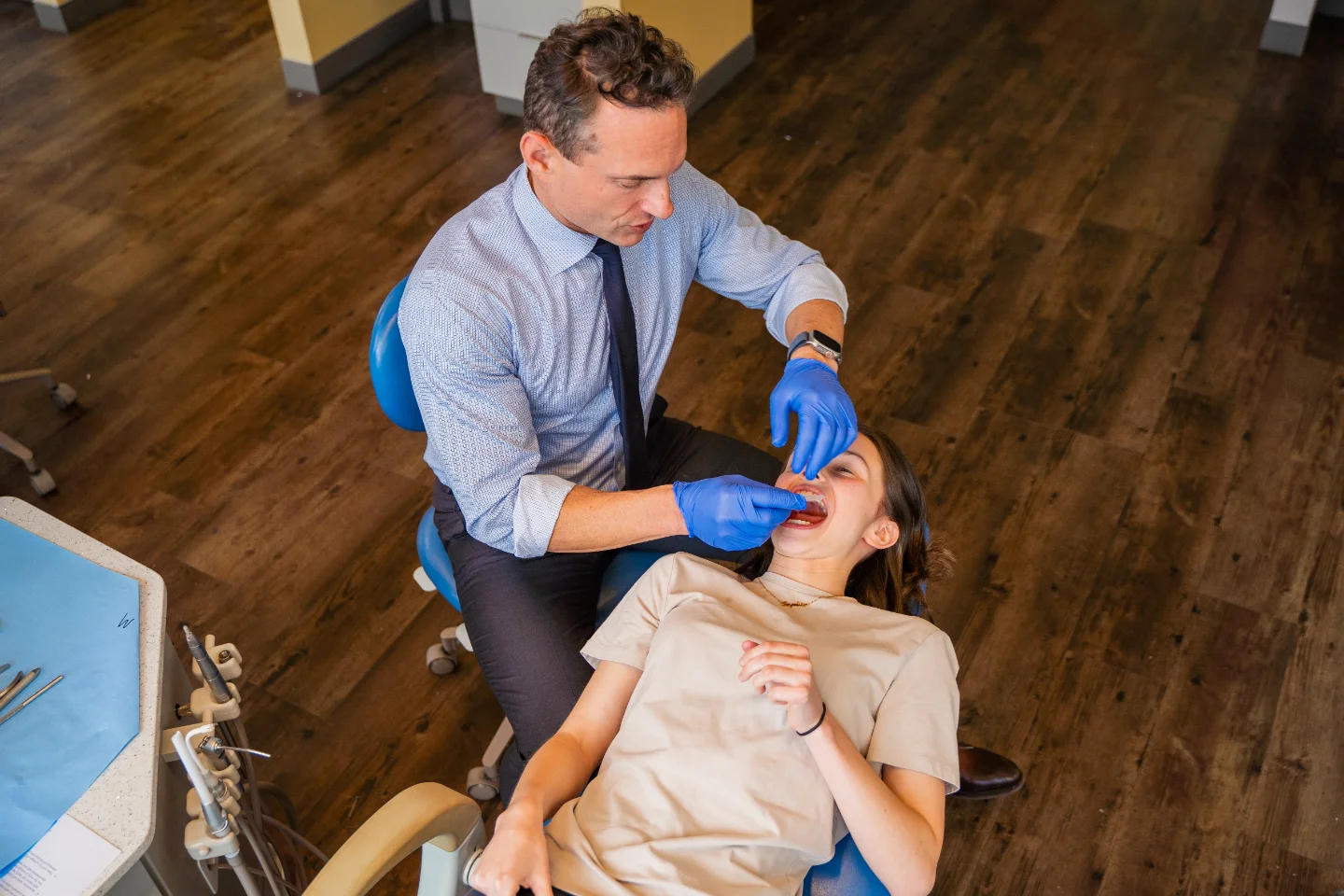
What Does Today's Orthodontics Actually Mean?
Orthodontic care in Bethlehem, PA looks nothing like it did even a decade ago. Today's orthodontists combine digital imaging, 3D planning, and advanced materials to create results that are more precise and far more comfortable than what was possible just a few years back.
But the real shift goes beyond technology. Care built around you means your treatment reflects your unique needs, not a cookie-cutter approach. Every smile is different, and today's orthodontics honors that. At Orthodontics of the Lehigh Valley, that philosophy drives every treatment plan.
To become an orthodontist, a dentist must complete two to three additional years of specialty training after dental school, earning board-certified doctor status. This focused education covers biomechanics, facial growth, and the complex interplay between teeth, jaws, and airways. That level of preparation is what separates a specialist from a general dentist who happens to offer aligners.
The field has evolved from purely mechanical tooth movement to a broader view of oral health. Today's specialists consider how your bite affects breathing, how your smile frames your face, and how treatment can support your long-term wellbeing. Rather than treating teeth in isolation, our orthodontist evaluates your bite, breathing, and facial balance together, reflecting how much the profession has grown.
How Orthodontic Practices in Bethlehem, PA Deliver Better Outcomes
What does it actually look like when a practice invests in current technology and puts patients first? Here's how the tools work together to produce more precise results, shorten treatment time, and improve comfort compared to older methods.
Digital scanning replaces messy impressions. Remember those gooey molds? They're increasingly a thing of the past. Digital scanners capture thousands of data points in minutes, creating precise 3D models of your teeth without the gag reflex. For most patients, the difference is night and day.
Before you commit to anything, treatment simulation software lets you see where your teeth will move and what your final result will look like. This isn't guesswork. It's software-driven planning that maps every stage of your treatment.
Your appliances are now fabricated specifically for your anatomy, whether you choose braces or clear aligners. Custom-bent wires and precision-manufactured aligners move teeth more efficiently than older, one-size-fits-all systems. That means fewer adjustments and, in many cases, a shorter overall timeline.
How about fewer trips to the office? Many practices now offer teleorthodontics, where you can check in from home using your smartphone. Your treatment stays right on track, but you get that time back in your week.
Evidence-based protocols guide every decision. Today's orthodontists rely on peer-reviewed research, not just tradition. Every recommendation, from when to start treatment to which appliance to use, is backed by clinical evidence. The American Association of Orthodontists has noted that advances in materials science and digital planning have made treatment more efficient while improving patient comfort. These aren't small improvements. They represent a real shift in how orthodontic care is delivered.
Key Benefits of Choosing a Patient-Focused Orthodontist
When you work with an orthodontist who puts patients first, the whole experience feels different, from your first visit through your last adjustment.
How Do Current Techniques Improve Your Treatment Experience?
- Shorter treatment times. Advanced bracket systems and aligner technology often reduce how long you'll wear appliances. Cases that once stretched to three years might wrap up in roughly eighteen months, depending on complexity.
- Less discomfort. Heat-activated wires apply gentle, consistent pressure. Low-friction brackets reduce the force needed to move teeth. Most patients are genuinely surprised by how comfortable treatment feels today.
- Flexible scheduling. With remote monitoring and longer intervals between adjustments, you'll spend less time in the office. That matters for busy families, working professionals, and anyone juggling a packed calendar.
Why Does Patient-Centered Communication Matter?
- Your orthodontist looks at the full picture. Function, aesthetics, and stability all factor into the plan. A beautiful smile that doesn't work well or doesn't last isn't a success.
- You're part of the team from day one. Practices like Orthodontics of the Lehigh Valley explain your options clearly, answer your questions honestly, and involve you in every decision about your care. That kind of transparency builds trust, and it leads to better results.
Traditional Orthodontics vs. Today's Advanced Approach
Understanding what's changed helps you make an informed choice about your care.
| Aspect | Traditional Approach | Current Approach |
|---|---|---|
| Diagnostics | Physical molds and 2D X-rays | Digital scans and CBCT 3D imaging |
| Treatment Options | Standard metal brackets only | Braces, clear aligners, lingual options |
| Planning | Reactive adjustments at each visit | Predictive, software-driven planning |
| Customization | Same approach for most patients | Tailored plans based on your biology |
| Provider Training | General dental education | Board-certified specialist orthodontists complete 2-3 years beyond dental school |
One distinction deserves special attention: the difference between a specialist orthodontist and a general dentist offering aligners. Both may advertise straight teeth, but the training gap is significant. Board-certified orthodontists have dedicated years to understanding tooth movement, jaw development, and treatment complications. When something unexpected happens, and it sometimes does, that expertise matters. For families in Bethlehem, PA, choosing a specialist is one of the most important decisions you can make for your smile.
What Influences the Price of Orthodontic Treatment?
The investment in orthodontic treatment typically depends on case complexity, appliance type, the technology a practice uses, insurance coverage, and provider qualifications. Knowing what affects pricing helps you plan ahead and compare options fairly.
A mild spacing issue will run less than a severe bite correction requiring years of treatment. The amount of movement needed and the time required are the biggest factors in any estimate.
What about the type of appliance? Metal braces typically run less than ceramic brackets or Invisalign. However, the right choice depends on your needs, not just your budget.
Practices that invest in digital scanners, 3D imaging, and advanced software deliver more predictable results. This doesn't always mean higher prices. It often means fewer complications and less need for refinements down the line. Think of it as paying for precision upfront rather than corrections later.
Many dental insurance plans cover orthodontic treatment, and flexible low monthly payment options make care accessible. Payment calculators can help you understand amounts before you commit. Starting with a board-certified doctor also reduces the risk of retreatment, which can save money over time. Poorly managed cases sometimes require a second round of treatment, and that's an outcome worth avoiding.
Who Benefits Most from Today's Orthodontic Approach?
Orthodontic treatment serves patients across every age group, from young children to adults in their 60s and beyond. Children, teens, adults, and patients with complex bite issues all benefit from current techniques, and the reasons people seek care in Bethlehem, PA are just as varied as the patients themselves.
- Children as young as 7 benefit from early evaluation. The American Association of Orthodontists recommends a first visit by age seven, when early intervention can guide jaw growth and prevent more involved treatment later.
- Teens today have more discreet options than any previous generation. Clear aligners, ceramic brackets, and lingual braces (placed behind the teeth) all let them straighten their smiles without feeling self-conscious. For many teens, that confidence boost is just as meaningful as the clinical result.
- Adults represent the fastest-growing patient group in orthodontics. Whether you missed treatment as a kid or your teeth have shifted over time, it's never too late to invest in your smile. Our orthodontist sees adults every single day, and many say they wish they'd started sooner.
- Complex cases involving jaw discrepancies may benefit from surgical orthodontics, where board-certified specialists coordinate with oral surgeons to achieve results that braces alone can't deliver.
- If you value comfort and efficiency, you're a strong candidate for today's care. Fewer unnecessary appointments, less discomfort, and clear expectations from the start make the whole smile process smoother than most people expect.
Frequently Asked Questions About Orthodontic Care in Bethlehem, PA
What's the difference between an orthodontist and a dentist who does braces?
At Orthodontics of the Lehigh Valley, our orthodontist is a dental specialist who completed two to three years of additional training after dental school, focusing exclusively on tooth movement and jaw alignment. A general dentist may offer aligners but lacks this specialized education. For complex cases or growing children, specialist training makes a meaningful difference in outcomes.
How long does orthodontic treatment typically take?
Treatment length depends on your specific case. Simple alignment issues might resolve in six to twelve months, while more complex bite corrections can take eighteen to thirty months. Advanced techniques and materials have shortened average treatment times compared to previous decades, but every patient is different. Our orthodontist can give you a realistic timeline during your first visit.
Is Invisalign as effective as braces for complex cases?
Invisalign is effective for many cases, including some that were once considered braces-only, but it does have limitations. Severe rotations, significant bite issues, or certain jaw discrepancies may still respond better to traditional braces. A specialist orthodontist can evaluate your situation and recommend the most effective approach for your specific needs.
At what age should my child first see an orthodontist?
The American Association of Orthodontists recommends an initial evaluation by age seven. This doesn't mean treatment starts then. It means our orthodontist can identify developing issues and intervene at the ideal time, which often prevents more extensive treatment later. For families in Bethlehem, PA, early evaluation is one of the smartest things a parent can do for their child's oral health.
How has technology made orthodontic treatment more comfortable?
Several advances contribute to improved comfort. Digital scanners eliminate the gag-inducing impressions of the past. Heat-activated wires apply gentler, more consistent pressure. Low-friction brackets reduce the force needed at each adjustment. And remote monitoring means fewer office visits overall, so you spend less time in the chair and more time living your life.