
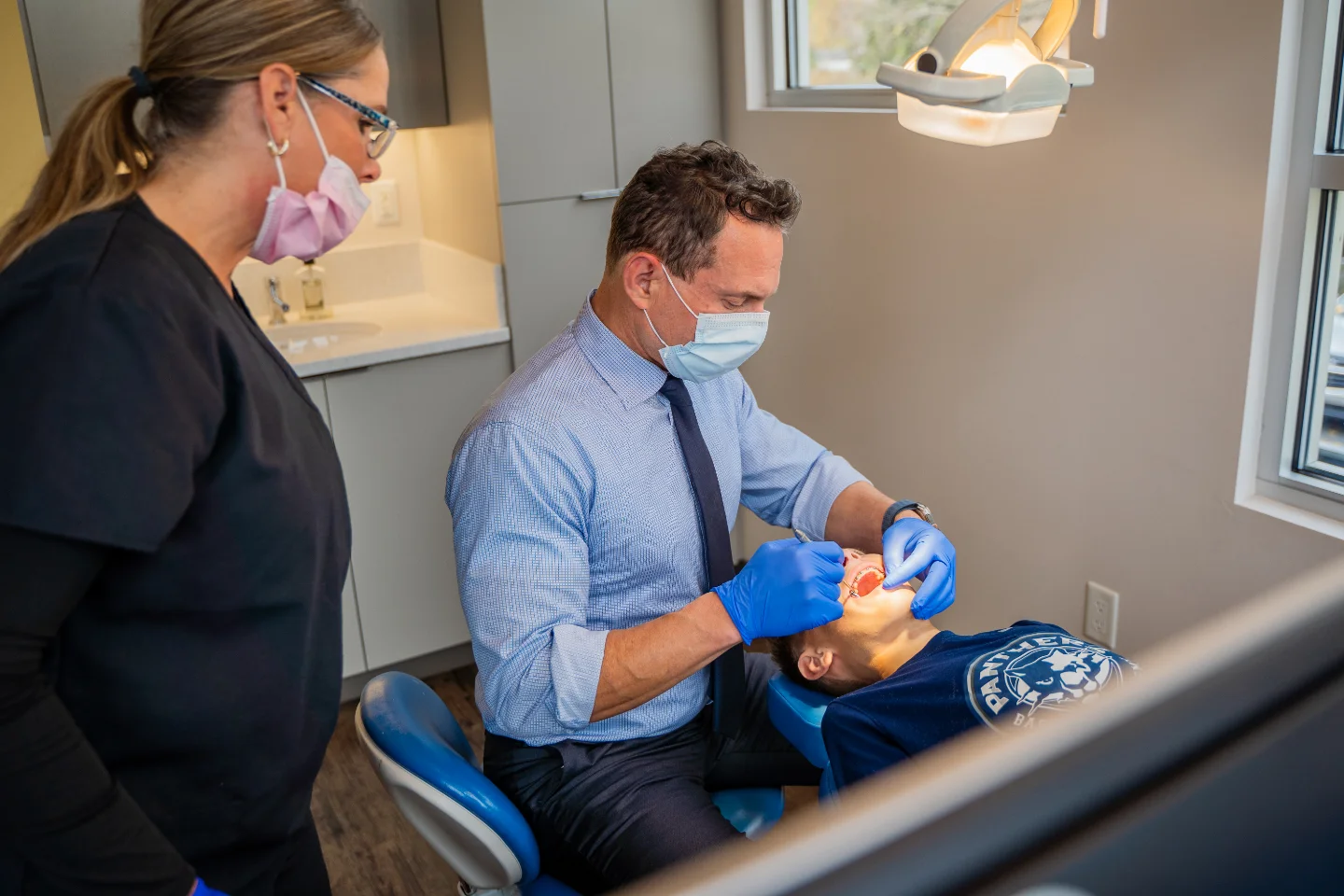
Orthodontic Care Is Evolving: What Today's Patients Can Expect in 2026
Orthodontic results in 2026 are faster, more comfortable, and more precise than ever before. That's thanks to tools like AI-powered diagnostics, digital treatment planning, and custom-fabricated appliances. Gone are the days of one-size-fits-all brackets and guesswork. Today's orthodontists use data-driven tools to map every millimeter of tooth movement before the smile process even begins.
The shift toward care built around each individual patient has changed what you can expect from start to finish. Digital scanners capture detailed 3D images of your teeth in minutes. AI software examines your bite, spacing, and jaw alignment to find the most efficient path to your new smile. Virtual simulations let you see projected results before a single bracket is placed or aligner is worn.
The smile process has evolved too. Comfort matters more now, with low-profile appliances that feel less bulky and cause less irritation. Many practices offer remote monitoring options, which means fewer trips to the office without sacrificing progress tracking. The focus has shifted from simply straightening teeth to creating a smile process that fits into your routine.
At Orthodontics of the Lehigh Valley, Dr. Stephen D. Ely brings these advances to families across the region. With training from Harvard School of Dental Medicine and board certification from the American Board of Orthodontics, he combines clinical expertise with the latest technology. The result? Plans that fit your life, your goals, and your schedule.
Parents, teens, adults, every age group has more options in 2026 than in any previous year. From clear aligners to braces, the possibilities keep expanding.
What Does Modern Orthodontic Care Look Like in 2026?
Understanding how modern orthodontic care unfolds helps you feel confident about what lies ahead. Here's what the process looks like at a practice using current technology, like Orthodontics of the Lehigh Valley:
Digital Scanners Replace Messy Impressions
Remember those gooey impression trays? They're becoming a thing of the past. Today's 3D intraoral scanners capture thousands of data points in just a few minutes. You'll see your teeth on screen immediately, no gagging or waiting for molds to set. The digital scan creates an exact replica of your mouth that becomes the foundation for your smile process.
AI Examines Your Unique Situation
Once your scan is complete, AI software goes to work. The program reviews your bite relationship, identifies crowding or spacing concerns, and evaluates jaw alignment. This analysis catches details that might be missed in a visual exam alone. Rather than replacing your orthodontist's expertise, the technology gives your orthodontist a clearer picture backed by real numbers, providing detailed information they can act on right away.
Virtual Treatment Simulation Maps Your Tooth Movement
This is where things get exciting. Your orthodontist uses specialized software to plan exactly how each tooth will move throughout the smile process. You can watch a simulation showing your smile changing from day one to the final result. This isn't just for show. It helps identify the most efficient path and sets realistic expectations for your timeline.
Custom Appliances Fabricated Just for You
Whether you choose clear aligners or braces, your appliances are made specifically for your teeth. At practices like Orthodontics of the Lehigh Valley, 3D printing technology creates brackets positioned for optimal movement. Aligners are trimmed to your exact gum line. Nothing is generic. Every piece is designed to work with your unique anatomy.
Remote Monitoring Tracks Progress Between Visits
Many patients now use smartphone apps to check in between appointments. You'll take photos that your orthodontist reviews remotely. If everything looks good, you keep going. If adjustments are needed, you'll come in. This approach saves time while keeping your smile process on track, and it's especially popular with busy families who appreciate the flexibility.
Key Benefits Patients Experience with Evolving Orthodontic Care
Patients today benefit from shorter treatment times, more comfortable appliances, fewer office visits, and predictable results. These advantages stem from AI-driven planning, custom-fabricated appliances, and remote monitoring tools now available at modern practices. Here are the real-world benefits patients notice:
Faster Treatment Timelines with Modern Technology
Accelerated orthodontic techniques help teeth shift more efficiently. High-frequency vibration devices, photobiomodulation, and optimized force systems can reduce overall timelines. While every case is different, many patients finish sooner than they would have with older methods. Accelerated techniques can noticeably shorten timelines depending on complexity.
Today's Appliances Feel More Comfortable
Today's brackets are smaller and smoother. Clear aligners fit more precisely. Custom fabrication means less poking, less rubbing, and less discomfort overall. You might forget you're wearing them. Almost.
Fewer Office Visits, Same Great Results
Remote monitoring means your orthodontist can check your progress without requiring you to come in. For busy families, working professionals, and students with packed schedules, this flexibility makes a real difference. You stay connected to your care team without rearranging your life. At Orthodontics of the Lehigh Valley, families take advantage of this flexibility regularly.
Predictable Results You Can See in Advance
Digital planning takes much of the guesswork out of orthodontics. Your orthodontist knows where each tooth needs to go and how long it should take to get there. This precision leads to more predictable outcomes and fewer surprises along the way.
Traditional Braces vs. Invisalign vs. 3D-Printed Appliances: A 2026 Comparison
Choosing the right option starts with understanding what's available. At practices like Orthodontics of the Lehigh Valley that invest in the latest tools, today's main appliance types stack up like this:
| Feature | Traditional Metal Braces | Invisalign Clear Aligners | 3D-Printed Custom Braces |
|---|---|---|---|
| Visibility | Most noticeable | Nearly invisible | Varies by design |
| Removability | Placed on teeth for the duration | Removable for eating/cleaning | Placed on teeth for the duration |
| Complex Cases | Excellent for significant bite or crowding concerns | Improved capabilities in 2026 | Promising for precision cases |
| Comfort | Smaller brackets than before | Smooth plastic edges | Custom-fit to teeth |
| Treatment Time | Varies by case | Comparable to braces | Early results are promising |
| Maintenance | Requires careful cleaning | Easy to clean when removed | Similar to traditional |
What Makes Traditional Metal Braces Still Effective?
Don't count out metal braces. They remain the gold standard for complex orthodontic cases involving significant bite correction or severe crowding. Today's brackets are smaller and more comfortable than versions from even five years ago. They're reliable, effective, and often the most economical choice.
Invisalign Has Improved Significantly for 2026
Invisalign has expanded its capabilities significantly. New attachment designs and improved materials mean clear aligners can now handle cases that previously required braces. For patients who prioritize aesthetics and want the freedom to remove their appliances for special occasions, Invisalign remains a popular choice.
3D-Printed Custom Braces Are Emerging
This emerging option represents the next frontier. Brackets are designed and printed specifically for each patient's teeth, allowing for precise positioning that can improve efficiency. While not yet available everywhere, practices investing in advanced technology are beginning to offer this option. Orthodontics of the Lehigh Valley stays at the forefront of these developments, evaluating new tools as they become available.
Which is right for you?
That depends on your specific diagnosis, lifestyle preferences, and goals. A board-certified orthodontist like Dr. Ely can evaluate your situation and recommend the approach most likely to give you the results you want. Our team helps patients choose between these options based on what will work best for their unique case.
What Influences Orthodontic Fees in 2026?
Orthodontic fees in 2026 typically depend on four main factors: case complexity, appliance type, technology used, and insurance coverage. Most practices offer flexible payment options, and understanding what affects pricing helps you plan ahead. Here's a closer look at each factor.
How Does Case Complexity Affect Your Fees?
The biggest factor in pricing is how much work your teeth need. Minor spacing concerns require less time and fewer adjustments than severe crowding or bite irregularities. Longer smile processes naturally run higher because they involve more appointments and materials.
Does the Type of Appliance Change the Price?
Different appliances come with different price points. Traditional metal braces typically run less than clear aligners or custom 3D-printed options. But the least expensive option isn't always the best value. The right choice depends on what will work most effectively for your specific case.
Technology Adds Value to Your Care
Practices using advanced diagnostic tools and digital planning have invested significantly in equipment and training. This technology adds value through more precise care and better outcomes. Interestingly, it doesn't always translate to higher patient fees. Efficiency gains can offset technology expenses.
What About Insurance and Payment Plans?
Many dental insurance plans cover a portion of orthodontic care. Flexible payment options make the remaining balance manageable. A payment calculator can help families understand their low monthly payment before committing.
Start with a Complimentary Consult
The only way to know your specific number is to schedule an evaluation. A complimentary consult lets you understand exactly what your smile process involves and what it will run. No surprises, no pressure.
Who Is a Candidate for Today's Advanced Orthodontic Treatments?
Orthodontics is for everyone. Candidates for modern orthodontic care span a wide range of ages and needs, including:
- Children as young as seven (early evaluation)
- Teens with most permanent teeth erupted
- Adults of any age seeking alignment or bite correction
- Patients with previous relapse after earlier orthodontic work
- Complex surgical cases requiring coordinated care
When Should Children Get an Orthodontic Evaluation?
The American Association of Orthodontists recommends an orthodontic evaluation by age seven. At this age, your child still has baby teeth, but an orthodontist can spot developing concerns with jaw growth or tooth eruption. Early intervention, sometimes called Phase One treatment, can guide growth and simplify future care.
The Teen Years Remain Ideal for Orthodontic Care
Teenage years remain a prime window for orthodontic care. Most permanent teeth have erupted, and jaw growth is still occurring. Today's teens have more choices than before, from barely-visible ceramic braces to clear aligners that fit their active lifestyles.
Adults Can Start at Any Age
More adults are pursuing orthodontic care than at any point in recent memory. Maybe you had braces as a teen and your teeth shifted. Perhaps you never had the opportunity earlier. Either way, modern options make adult care more discreet and convenient. Clear aligners are especially popular with working professionals. A board-certified doctor like Dr. Ely, with his Harvard training and ABO certification, can match each adult patient with the right approach.
Previous Relapse and Complex Cases
If your teeth have shifted after earlier orthodontic work, you're not alone. Updated aligner technology makes retreatment simpler than starting from scratch. Often, these cases require shorter timelines since the teeth have been aligned before. Surgical orthodontic cases involving jaw repositioning also benefit enormously from AI-driven planning, where digital simulations allow orthodontists and oral surgeons to coordinate with a level of precision that wasn't possible before.
A diagnostic evaluation is the first step. Your orthodontist will examine your teeth, bite, and jaw relationship to determine which technology and approach fits your needs best.
Frequently Asked Questions About Orthodontic Care in 2026
How has AI changed orthodontic care?
AI examines your digital scans to predict how teeth will move and identifies the most efficient path forward. It helps orthodontists spot potential concerns early and create more precise plans. The technology processes thousands of data points from your scan and highlights exactly what your orthodontist needs to focus on, saving time and improving accuracy.
Is Invisalign better in 2026 than previous years?
Yes, significantly. New attachment designs, improved aligner materials, and expanded protocols mean Invisalign can now address more complex cases than earlier versions. Bite correction, extraction cases, and significant crowding that once required braces can often be treated with clear aligners. According to the American Association of Orthodontists, clear aligner technology has advanced substantially over the past decade.
Can I monitor my orthodontic progress remotely?
Many practices now offer teleorthodontic check-ins. You'll use a smartphone app to take photos of your teeth at regular intervals. Your orthodontist reviews these images and provides feedback without requiring an office visit. Patients at Orthodontics of the Lehigh Valley use this option regularly, and it works especially well for those with busy schedules or longer commutes.
Are 3D-printed braces available now?
They're emerging at select practices that invest in advanced technology. 3D-printed brackets are custom-designed for each patient's teeth, allowing for precise positioning that can improve efficiency. While not yet mainstream, this technology represents an exciting direction for the field.
How long does the smile process take with accelerated methods?
Duration varies based on individual factors, but accelerated techniques can noticeably shorten timelines depending on complexity. Your orthodontist can provide realistic estimates based on your specific case during your complimentary consult.
Do I still need to wear a retainer after my smile process is complete?
Yes, absolutely. Retention remains essential regardless of which method you choose. Your teeth naturally want to shift back toward their original positions, especially in the months right after active care ends. Most orthodontists recommend wearing retainers indefinitely to protect your results.
The world of orthodontic care keeps moving forward, and 2026 brings options that make achieving your best smile more comfortable, efficient, and accessible. From clear aligners to AI-driven planning, the tools available today give patients and orthodontists more control over outcomes than previous generations could have imagined. If you're curious about clear aligners, interested in how AI shapes planning, or simply ready to explore your options, the first step is always a conversation with a qualified orthodontist who can evaluate your unique situation and walk you through what to expect. At Orthodontics of the Lehigh Valley, Dr. Ely and our team are here to help you upgrade your smile with the best that modern orthodontics has to offer.